
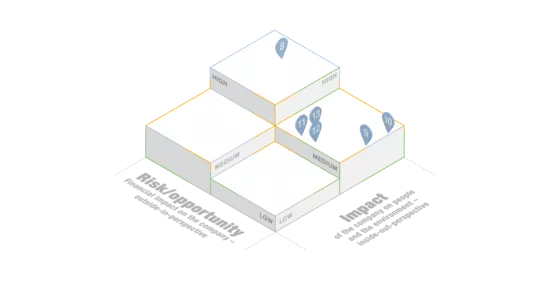
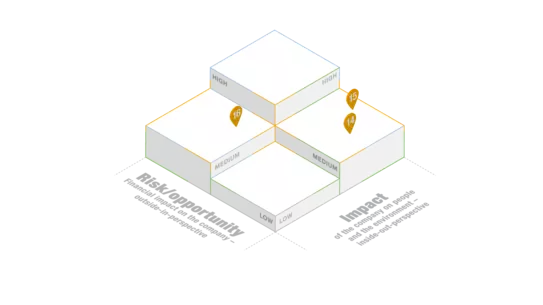
On the one hand, the Planet field of action focuses on our products and services, which enable lightweight construction, downsizing of components and material savings, for example. On the other hand, it is also about developing measures to ensure that our products can be manufactured more sustainably. In terms of content, these range from the use of renewable energies to the optimization of processes in order to minimize waste.
Our key topics and objectives
Innovative products and processes:
- Developing sustainable and optimised joining solutions for future-oriented industries and sectors, such as electric mobility and renewable energy.
- Implement life cycle assessments (LCA) to evaluate the environmental impacts of our own products.
- Increase product transparency throughout the entire life cycle.
- Increase the proportion of recycled materials in our products and improve recyclability.
Environmental and climate protection:
- Establish the “Avoid – Reduce – Offset” principle as a strategic framework.
- Use the SBTi Net-Zero Standard to align and validate emissions targets.
Energy:
- Continuously reduce the relative energy consumption of our processes.
- Utilise a decentralised expert panel to identify and reduce major energy consumers.
- Promote collaboration with partners to develop further energy efficiency solutions.
Emissions:
- Prioritize emissions avoidance and reduction over offsetting.
- Further develop comprehensive emissions reporting for all stakeholders.
Production and logistics:
- Reduce waste and increase the separate collection and recycling of production and logistics waste.
- Increase the use of recycled materials in production wherever possible.
- Further expand sustainability requirements in the supply chain, for example through tools such as the Code of Conduct or assessments.